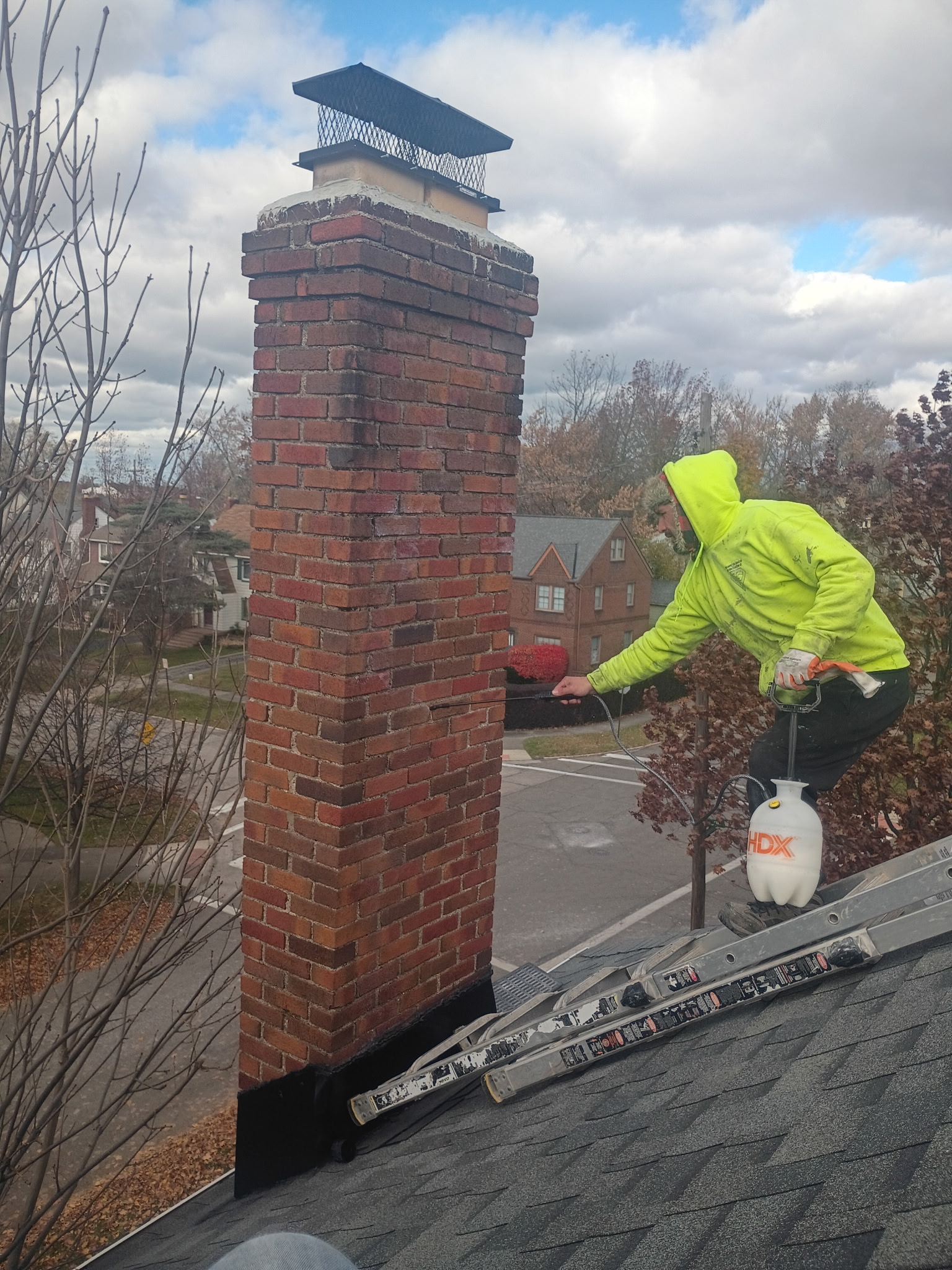
If you've been told your chimney needs "waterproofing" or "sealing," you might be wondering what the difference is — and whether you actually need it. Here's a clear explanation of both treatments and when each is appropriate.
Chimney Sealing: Surface-Level Protection
Chimney sealing typically refers to applying a silicone or acrylic sealant to the exterior masonry surface. These products fill the pores in the brick and mortar, creating a surface barrier against water penetration.
The problem with standard sealers is that they trap moisture inside the masonry. Brick is a porous material that naturally absorbs and releases moisture. If you seal the surface completely, moisture that gets in from the inside (through the flue) or from below (through the foundation) has nowhere to go — it gets trapped and causes spalling, cracking, and accelerated deterioration.
Chimney Waterproofing: The Right Approach
Professional chimney waterproofing uses vapor-permeable water repellents — specifically formulated for masonry chimneys — that allow water vapor to escape from inside the masonry while preventing liquid water from entering from outside.
The industry standard product is ChimneySaver Water Repellent, a silane/siloxane-based formula that:
- Penetrates deep into the masonry (not just surface coating)
- Is 100% vapor permeable — moisture inside can still escape
- Reduces water absorption by up to 99.9%
- Carries a 10-year manufacturer warranty
- Does not change the appearance of the masonry
When Is Chimney Waterproofing Needed?
Waterproofing is appropriate as a preventive treatment for any exposed masonry chimney. It's especially important for:
- Chimneys with porous or soft brick (common in older Cleveland homes)
- Chimneys that have been tuckpointed — fresh mortar is more porous than cured mortar
- Chimneys in exposed locations with no tree coverage
- Any chimney where the homeowner wants to extend the life of the masonry
Waterproofing is not a substitute for structural repairs. If your chimney has cracked mortar, a damaged crown, or failed flashing, those issues must be addressed first. Waterproofing a damaged chimney just seals in the problems.
Cost of Chimney Waterproofing in Cleveland
Professional chimney waterproofing with ChimneySaver typically costs $200–$500 for a standard residential chimney, depending on size and accessibility. This includes cleaning the surface, applying two coats of waterproofing, and a written warranty.
Five Star applies ChimneySaver waterproofing as part of comprehensive chimney restoration projects and as a standalone service. Call 216-468-4864 for a free estimate.